

The Museum of Occupations and Freedom Fights, officially known today as such but formerly called the Museum of Genocide Victims, is located inside the building that served for fifty years as the KGB headquarters. It also housed the old, commemorative, yet terrible and haunting prisons, which is why it is more commonly referred to as the KGB Museum. It was established in 1992 by the Lithuanian government following the 1990 declaration of independence and the collapse of the Soviet Union.
The building was also a site of Nazi occupation during World War II, briefly serving as the headquarters for the Gestapo, the German secret police.
Building History and Use Through the Years
The history of foreign occupation of this structure actually began in 1889, nearly a century earlier. During that period, it first served as an administrative seat for Tsarist Russia, then as a German military post during the Great War, and later as the administrative headquarters of the Polish government. These occupations culminated with the Gestapo headquarters during WWII and the Soviet secret police (KGB) headquarters from 1944 to 1991. A history of occupation and blood, a struggle for civil and national freedom lasting nearly a century: this is what the Genocide Museum represents.
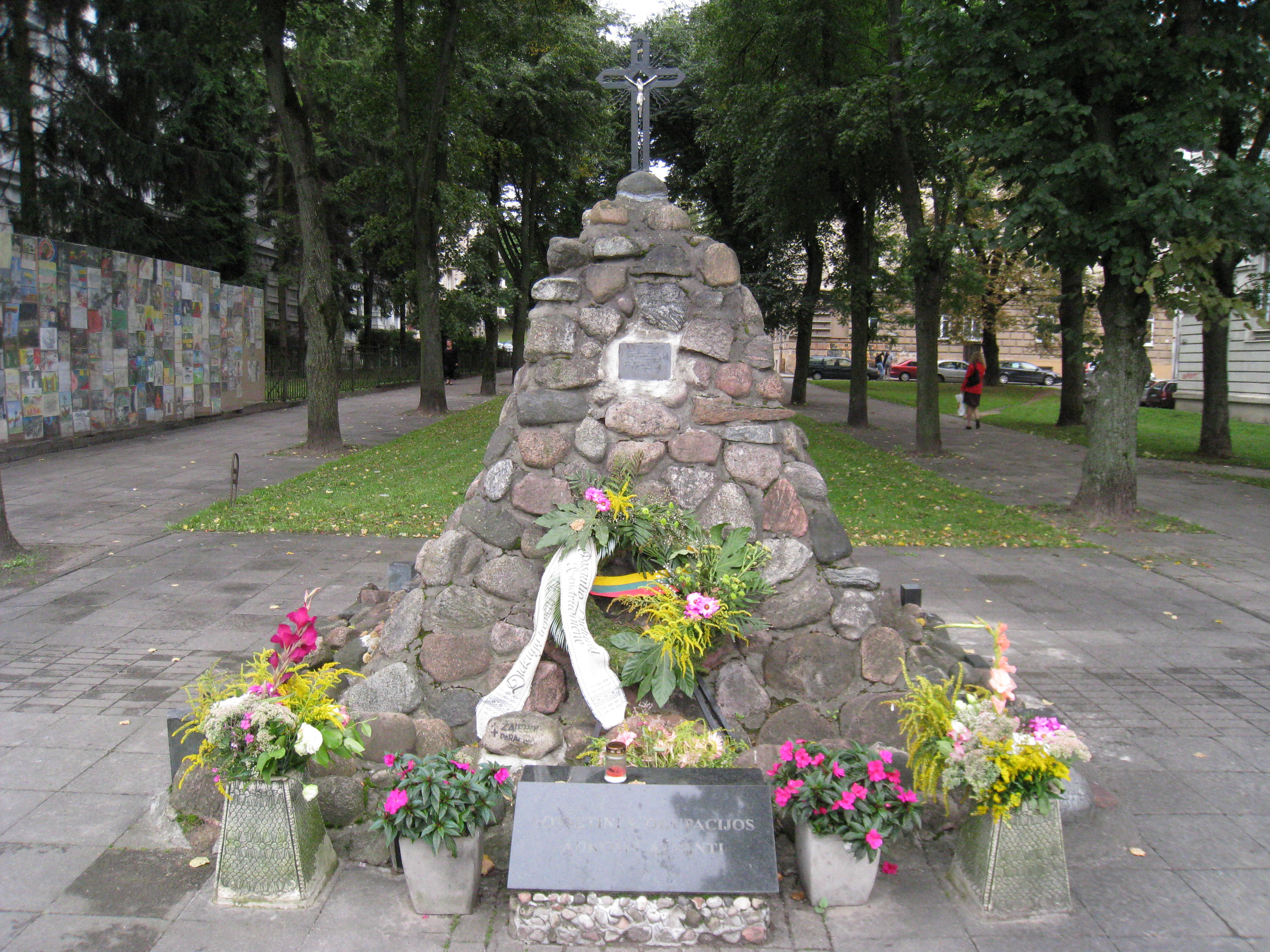
Monument to the victims of Genocide
Soviet and Nazi Atrocities
Lithuania was one of the countries most affected by Soviet atrocities, paying a heavy price in human lives; true martyrs killed and tortured for their will for freedom and independence—both civil and religious—against a suppressive government that never accounted for the simplest human rights, so much so that the nation was called “territory of blood.” However, the torture and persecution were not only Soviet.
During World War II, the Nazi persecution of the Jewish population primarily unfolded here in Vilnius. The city, also known as the “Jerusalem of the East,” had a Jewish community of over 60,000 individuals. During the Nazi and Soviet occupations, this community was confined to the city center in what became the Vilnius Ghetto, now known as the Jewish Quarter.
The majority of those deported were later executed near Paneriai, a hill not far from Vilnius. This atrocious event, where tens of thousands of Jews perished, is remembered as the Ponary Massacre. Today, only a few thousand Jews live in Vilnius.
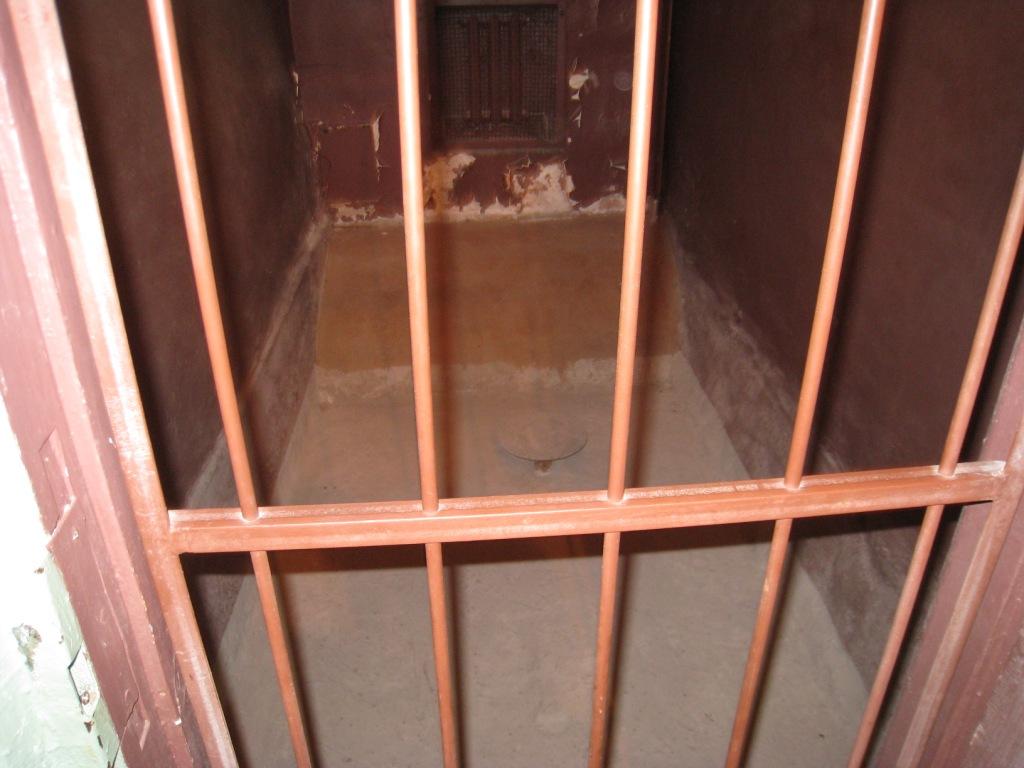
Torture chamber
What We Find Inside the Museum
Returning to the museum itself, the Museum of Occupations and Freedom Fights is divided into two sections. The first part spans two floors and tells the story of the Lithuanian nation: the struggle against foreign oppression, first Nazi and then Soviet, through films, documents, historical artifacts, and partisan testimonies. Various elements of historical interest are reconstructed, such as command and surveillance rooms. On display are various uniforms of officials and generals, weaponry, and a vast collection of letters and stories—both official and private—that find space here in a flow of history and memory, transporting us to a past that is unfortunately too recent and too dark to be forgotten.
This museum aims to be a place of memory, indelible and sadly irreplaceable, ensuring that every individual is personally involved. By contributing through personal memory, it helps build a future that does not forget past atrocities and reconstructs a past that deserves to be remembered. With this mandate, the Lithuanian Minister of Culture and several survivors of imprisonment and exile decided to convert the building into a place of remembrance.
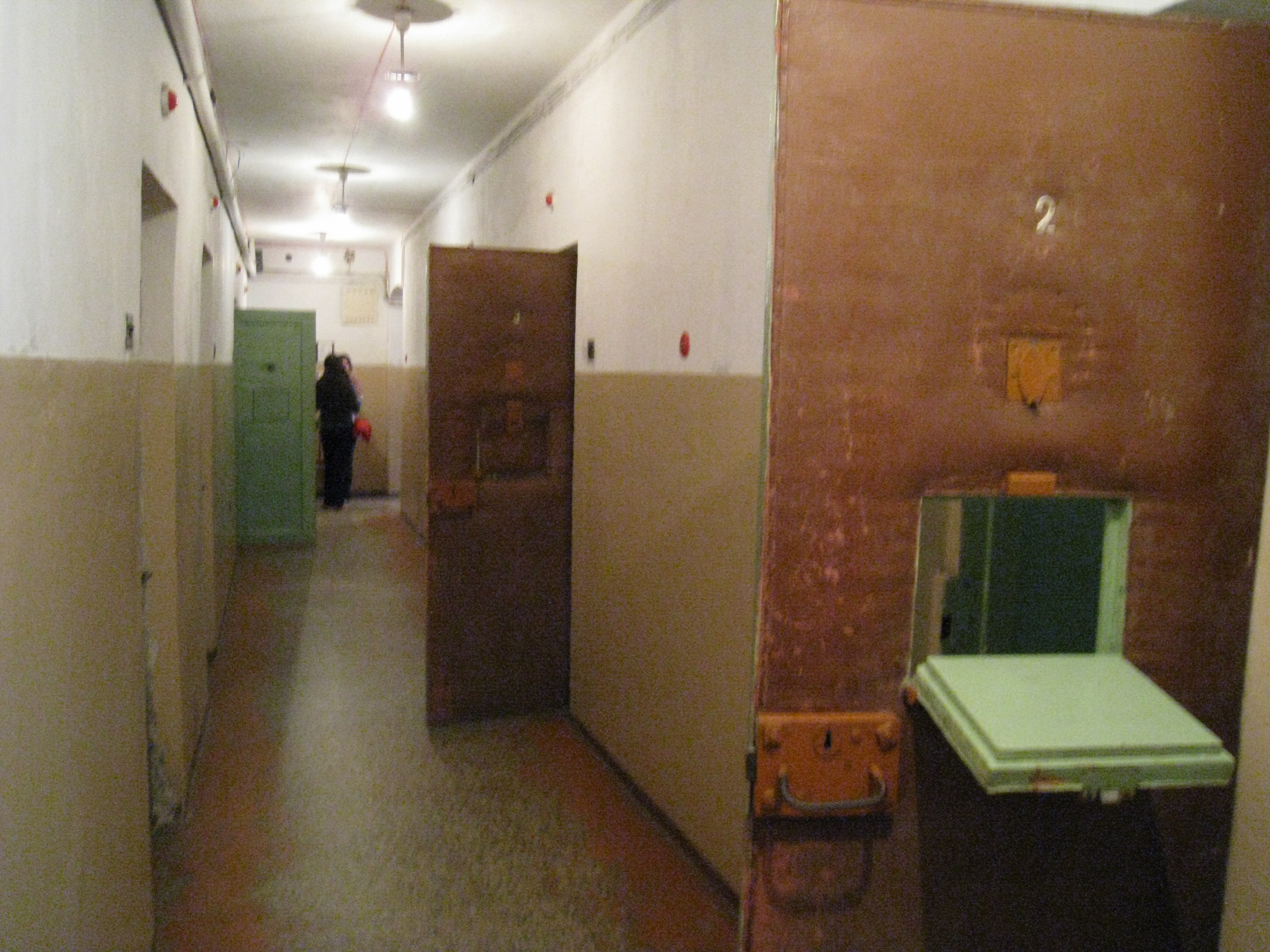
KGB Museum Prisons – Vilnius
The KGB Prisons and Torture
The second part consists of the prisons. Descending into the basement, one immediately feels a sense of unease and oppression that soon turns into nausea. At least, “nausea” is the sensation I felt most strongly when, going down those stairs, I found myself catapulted into a past that seemed so distant to my eyes, yet turned out to be so close upon reading the first dates written on an explanatory plaque next to the first cell: they marked years ranging from 1950 to 1980. My father was born in 1960, post-war; by then, life in Europe was relatively peaceful, but here in Lithuania, and in other Soviet territories just a few hours’ flight from where we live, such atrocities were still being committed.
We walk through and read the plaques in English explaining the purpose of certain cells used for isolation and torture. I vividly remember a space—calling it a cell is a compliment—where the prisoner had to remain standing because there was no room for any other position, all in total darkness. This psychological torture was used before interrogations: prisoners were locked up for hours until, disoriented and completely stripped of their own strength and will, they were interrogated like docile, helpless animals. The padded and completely soundproofed cells gave the prisoner a crushing sense of oppression: a true psychological torture before the physical one.
We also find reconstructions of the military operations center and a cell now dedicated to the memory of the Holocaust, with a large Star of David appearing before us as we pass by. Pope Francis visited this site in 2018, commemorating the victims of a Genocide that, even if not officially recognized by that name globally, represents for the Lithuanian community the memory of the Soviet occupation and its victims: approximately 20,000 Lithuanians lost their lives due to Stalinist purges and Siberian camps, and many of the 250,000 deported Lithuanians never returned home.
Article by Simone Serri
Pope Francis at the KGB Museum in Vilnius
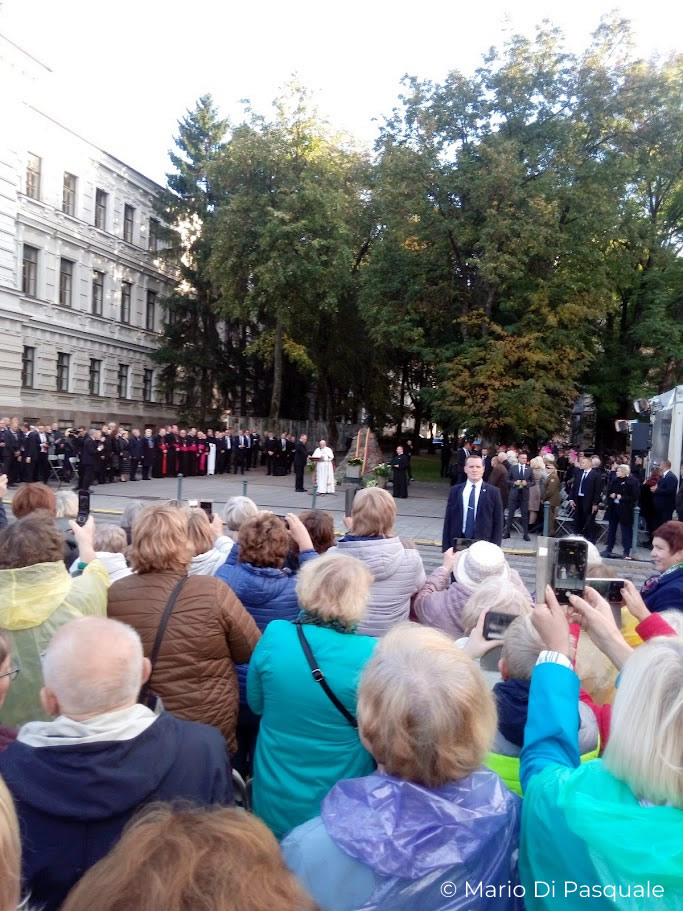
On September 23, 2018, the city of Vilnius witnessed one of the most profound and touching moments of Pope Francis’s pontificate. During his apostolic journey to the Baltic States, the Pope visited the Museum of Occupations and Freedom Fights, infamously known as the former KGB prison. This was not a mere diplomatic stop, but a pilgrimage into the dark heart of the twentieth century.
The power of the event lay in the silence. Francis descended into the underground cells—cramped, freezing environments where, for decades, thousands of political, religious, and civil opponents were detained, tortured, and killed. In those spaces that still exude the pain of the victims of totalitarian regimes (first Nazi, then Soviet), the Pontiff stopped in solitary prayer, letting the emptiness of those corridors speak louder than any official speech.
75th anniversary of the liquidation of the Vilnius Ghetto: a warning against all forms of hatred and intolerance.
This event transformed a place of historical memory into an altar of reconciliation. Francis reminded the world that freedom is not a guaranteed achievement, but a gift to be guarded through memory and vigilance. That afternoon in Vilnius remains a powerful icon: a man dressed in white who, within the gray walls of repression, sought to rekindle the light of hope and forgiveness.