


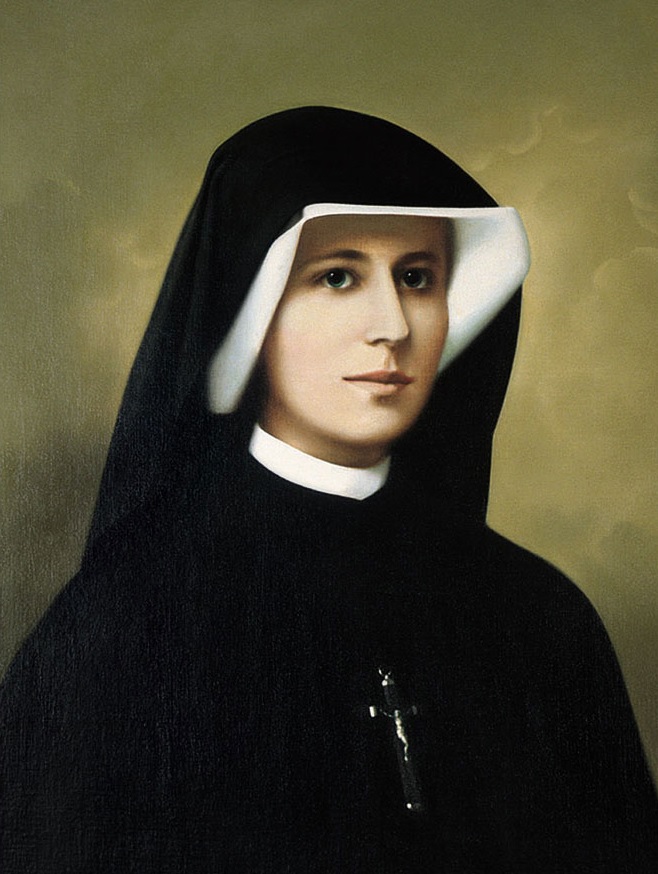
The story of Saint Faustina Kowalska is the account of a humble soul chosen by God to remind the world of a forgotten truth: the Merciful Love of Jesus. Defined by Saint John Paul II as “God’s gift to our time,” Elena Kowalska (her secular name) transformed her suffering into a beacon of hope for all humanity.
The Roots of Faith: The Childhood and Youth of Elena Kowalska
The mission of the “Secretary of Divine Mercy” begins on August 25, 1905, in the village of Głogowiec, Poland. The third of ten children in a poor and devout peasant family, she was baptized with the name Elena. From her earliest years, little Elena distinguished herself through an uncommon piety, an ardent love for prayer, and a deep sensitivity toward the poverty of others. Despite attending school for less than three years, she demonstrated a rare spiritual intelligence.
Already at the age of seven, Elena felt God’s call for the first time—an inner voice inviting her to a life of total consecration. However, her parents, though very religious, firmly opposed her entry into a convent due to the family’s extreme poverty. Out of obedience, Elena tried to stifle that calling by working as a domestic helper in various cities such as Aleksandrów and Łódź to support her loved ones.
The Vision in the Park and the Flight Toward her Vocation
The turning point occurred in 1924. During a dance in Łódź, while trying to live a normal life like her peers, Elena had a shocking vision: a suffering and tortured Jesus appeared beside her and said: “How much longer shall I put up with you and how long will you keep putting Me off?”. Deeply shaken, the young woman immediately went to the cathedral to pray and received the command to leave for Warsaw at once.
Without luggage and with very little money, Elena boarded a train for the capital, entrusting herself totally to Providence. After knocking on many doors, she was finally accepted into the Congregation of the Sisters of Our Lady of Mercy on August 1, 1925. There she took the name Sister Maria Faustina, to which she would later add the title “of the Most Blessed Sacrament.” Her religious life, seemingly monotonous amidst her duties as a cook, gardener, and portress, actually concealed an extraordinary mystical union with God.
The Vilnius Period: Where It All Began
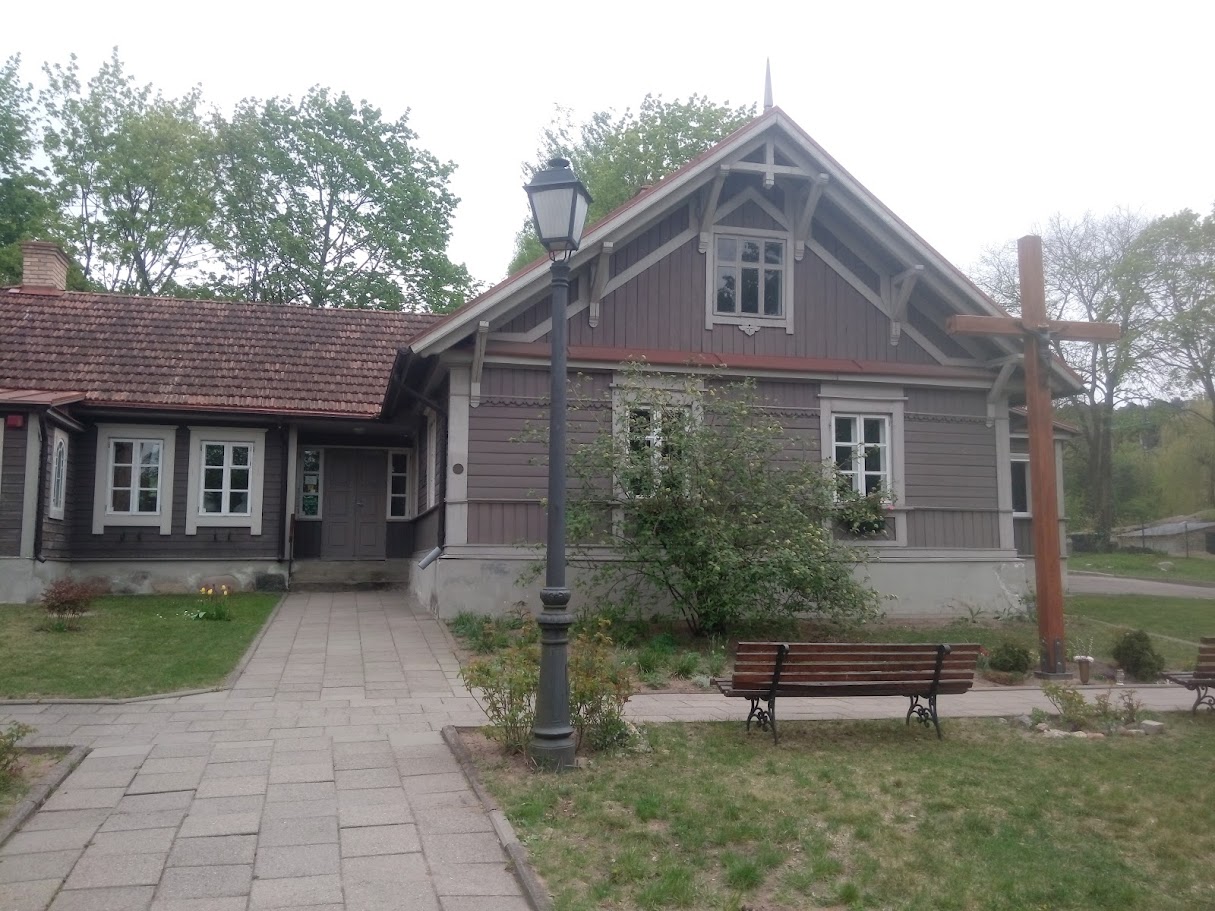
Although Faustina lived in several convents, Vilnius (then Wilno) represents the most significant stage for the devotion to Divine Mercy. The Saint stayed in Vilnius primarily during two periods:
- February – April 1929 (for a brief substitution).
- May 1933 – March 1936 (the crucial period).
The Salient Events in Vilnius
It was precisely within the walls of the modest wooden house on Grybo Street that the events which today change the lives of millions of faithful took place:
- The Meeting with Blessed Michael Sopoćko: In Vilnius, Faustina finally found the “spiritual director” promised to her by Jesus. Without the guidance and prudence of Father Sopoćko, the message of Mercy would never have crossed the convent walls.
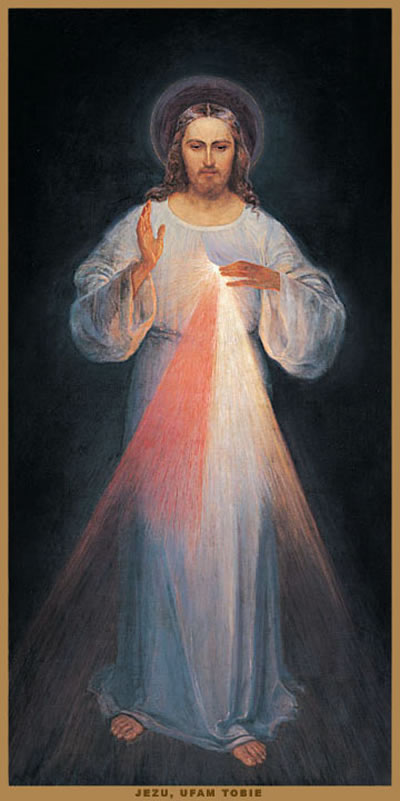
- The Birth of the Image of Divine Mercy (1934): Under Faustina’s direction and thanks to Father Sopoćko’s funding, the painter Eugeniusz Kazimirowski painted the first original Divine Mercy Image. It is the only image painted according to the Saint’s direct instructions.
- The Chaplet of Divine Mercy (1935): During a vision that took place in Vilnius on September 13-14, 1935, Faustina received the prayer of the Chaplet as a tool to appease divine wrath and save sinners.
- The First Public Exposition: In 1935, during the closing triduum of the Jubilee of the Redemption of the World, the image was displayed for the first time at the Gate of Dawn (Ostra Brama).
The Diary: A Command from God and Men
One of the pillars of Faustina’s mission is her Diary, titled “Divine Mercy in My Soul”. But why did she decide to write it? It was not out of vanity or a desire for fame, but out of a twofold obedience. On one hand, Jesus himself repeatedly commanded her: “Secretary of My most profound mystery, write… your task is to write down everything that I make known to you about My mercy” (Diary, 1605). On the other hand, it was her confessor in Vilnius, Father Michał Sopoćko, who asked her to put her interior experiences in writing so that he could better examine their spirit and authenticity.
In these hundreds of pages, written in simple handwriting but dense with meaning, Faustina records her visions, prophecies, interior struggles and, above all, her dialogues with Jesus. The Diary is not just an account of mystical events, but has become the fundamental text for understanding the devotion to Divine Mercy, offering answers to the fears of modern man and pointing to trust as the only path toward salvation. Writing was not easy for her: she often did it in secret, amidst the many duties of the convent and despite her worsening tuberculosis, completing a work that today is translated into dozens of languages.
The Spiritual Legacy and Canonization
Saint Faustina died in Krakow on October 5, 1938, at just 33 years old, consumed by tuberculosis and offered as a victim for sinners. Her Diary, written out of obedience to her confessor, is today a classic of Christian mysticism.
She was canonized on April 30, 2000, by Pope John Paul II, who on the same day instituted Divine Mercy Sunday for the entire Church.
Official Source
To delve deeper into the original texts and biographical chronology, we recommend consulting the official portal of the Congregation to which the Saint belonged: 👉 Official Website of the Congregation of the Sisters of Our Lady of Mercy
Article edited by the Redazione di Gesù Misericordioso, experts in Divine Mercy spirituality