







Merciful Jesus: The Message of Divine Mercy
Welcome to the portal dedicated to the discovery of Divine Mercy and Merciful Jesus, a ray of light that began to shine in a particular way in the 20th century to reach the entire world. This site was created with the intent of accompanying you along the steps of Saint Faustina Kowalska and Blessed Michael Sopocko, custodians of a message that has changed the history of modern spirituality.
The Original Image of Merciful Jesus
At the center of this devotion lies an extraordinary image: the original painting of Merciful Jesus. Often confused with the numerous subsequent reproductions, the only painting created under the direct supervision of Saint Faustina is the one preserved today in the Sanctuary of Divine Mercy. It was painted in Vilnius by the painter Eugeniusz Kazimirowski in 1934, faithfully based on the vision the Saint had in her cell. Admiring this work means looking at Jesus exactly as He Himself asked to be portrayed, with His hand raised in blessing and the two rays, red and pale, emanating from His Heart.
Download for free the Divine Mercy Chaplet Android app

Vilnius, 26.X.1934. On Friday, at ten minutes to six, as I was going with the students from the garden to supper, I saw the Lord Jesus above our chapel, looking just as He did when I first saw Him and as He is painted in the image. The two rays which emanated from the Heart of Jesus covered our chapel and the infirmary, and then the whole city, and spread out over the whole world. This lasted about four minutes and then vanished. (Diary, 441)
I prayed ardently that the Lord would give me this great grace; namely, a spiritual director. I received this grace only after my perpetual vows, when I went to Vilnius. This was Father Sopoćko. (Diary, 34)
[…] the next day, Mother General called me and said, “Sister, as you want the pure will of God, here it is: you are going to Vilnius.” (Diary, 237)
“Paint an image according to the pattern you see, with the signature: Jesus, I trust in You.” (Diary, 47)
“Write: I am thrice holy, and I detest even the smallest sin. I cannot love a soul which is stained with sin; but when it repents, there is no limit to My generosity toward it. My mercy embraces and justifies it. I pursue sinners with My mercy on all their paths, and My Heart rejoices when they return to Me. I forget the bitterness with which they fed My Heart and rejoice at their return. Tell sinners that no one shall escape My hands. If they run away from My merciful Heart, they will fall into the hands of My justice. Tell sinners that I am always waiting for them, that I listen intently to the beating of their heart . . . when will it beat for Me? Write that I speak to them through remorse of conscience, through failures and sufferings, through thunderstorms, through the voice of the Church; and if they bring all My graces to naught, I begin to be angry with them, leaving them alone and giving them what they want.”
From the Diary of Saint Maria Faustina Kowalska (Notebook II, 1728)
Saint Faustina Kowalska: The Secretary of Mercy
At the center of devotion to Divine Mercy shines the humble and extraordinary figure of Saint Maria Faustina Kowalska. Born in Poland in 1905 and having lived within the convent walls of the Congregation of the Sisters of Our Lady of Mercy, this young religious sister received an immense task from Jesus: to become the “Secretary” of His message of love for modern times. Her life, marked by unwavering faith and profound suffering offered for souls, reached its spiritual climax in Vilnius. It was here, under the guidance of her confessor and together with the painter Eugeniusz Kazimirowski, that Faustina brought the divine will to life by translating the vision she carried in her heart into an image.
Through her famous Diary, Saint Faustina has given us not only a spiritual biography but a true manual of total trust in God. Jesus revealed to her that His Mercy is the last hope of salvation for humanity and that, through the veneration of His image and the prayer of the Chaplet, anyone can draw upon infinite graces. To know Saint Faustina means to immerse oneself in an ocean of hope, understanding that no human misery is too great to be forgiven. Her canonization, performed by Saint John Paul II in the year 2000, confirmed to the entire world the validity of this mission, making Faustina one of the most beloved and followed mystics in the history of the Church.
Vilnius: The City of Mercy
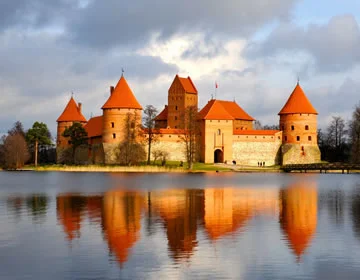
One cannot fully understand Saint Faustina’s diary without looking towards Vilnius. It is in this city, a crossroads of cultures and spirituality, that the “Secretary of Mercy” lived the most intense moments of her mission. Here the Chaplet was dictated, here the first congregation was born, and here the message took concrete form. Visiting Saint Faustina’s places in Vilnius, whether virtually or physically, means immersing oneself in an atmosphere of profound prayer, between the house where the revelations took place and the churches that have guarded the precious painting for decades.
History and Devotion
The history of Divine Mercy is not just a story of the past, but a current invitation to hope. Through this site, you can delve into the fundamental stages of the spread of the devotion, understand the profound meaning of Jesus’ promises, and find resources for your daily prayer. Whether you are pilgrims ready to leave for Lithuania or the faithful in search of comfort, we invite you to let yourselves be touched by the gaze of the original painting of Merciful Jesus, an inexhaustible source of grace and peace.