


The Chaplet of Divine Mercy is a very special prayer. First of all, it is one of the few prayers that were dictated directly by Jesus Himself. Furthermore, it is recited using common rosary beads; in fact, its structure is quite similar to the Rosary, only shorter, which is why it is called a “Chaplet.”
Last but not least, Jesus promised many Graces to those who recite the Chaplet of Divine Mercy.
The prayer of the Chaplet of Divine Mercy has spread widely since Pope Saint John Paul II instituted the Feast of Divine Mercy on the first Sunday after Easter in the year 2000.
Pope Francis is also very close to this prayer, and during the coronavirus pandemic, he recommended it among the prayers to be recited for the sick and for those fighting the pandemic. But how was this prayer born?
History of the Chaplet of Divine Mercy
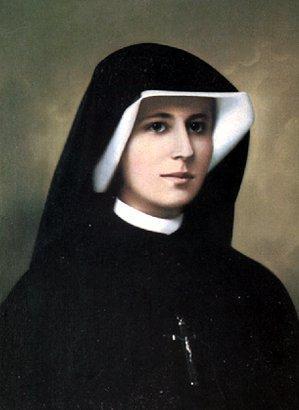
As mentioned, the prayer of the Chaplet of Divine Mercy was dictated by Jesus Himself to Saint Faustina Kowalska in 1935 while she was in Vilnius. As you may already know, Saint Faustina Kowalska had many visions of Jesus throughout her life. In one of the most important ones, Jesus asked her to have an image of Him painted and venerated, while in 1935 He dictated the Chaplet to Saint Faustina Kowalska.
According to some accounts, Saint Faustina received the Chaplet over two days.
On the first day, September 23, 1935, during a vision, she saw an Angel of God about to punish the earth. In the Saint’s heart, by inspiration of God Himself, this prayer came to her:
“Eternal Father, I offer You the Body and Blood, Soul and Divinity of Your Dearly Beloved Son, Our Lord, Jesus Christ, in atonement for our sins and those of the whole world; for the sake of His sorrowful Passion, have mercy on us.”
Thanks to this prayer, the Angel she saw in her vision was unable to punish the earth.
The next day, while going to the chapel to pray, she heard the words of Jesus confirming that the prayer she had felt in her heart was inspired by Him, and He added the instructions for reciting the Chaplet of Divine Mercy.
How to pray it
To recite the Chaplet of Divine Mercy, a common Rosary can be used. It begins with three prayers:
- Our Father
- Hail Mary
- The Apostles’ Creed
Next, on the large beads (those on which the Our Father is usually said), recite:
“Eternal Father, I offer You the Body and Blood, Soul and Divinity of Your Dearly Beloved Son, Our Lord, Jesus Christ, in atonement for our sins and those of the whole world.”
On the smaller beads (those in groups of 10 where the Hail Mary is usually recited), recite instead:
“For the sake of His sorrowful Passion, have mercy on us and on the whole world.”
At the end, recite three times:
“Holy God, Holy Mighty One, Holy Immortal One, have mercy on us and on the whole world.”
Finally, once:
“O Blood and Water, which gushed forth from the Heart of Jesus as a fount of mercy for us, I trust in You.”
Some reflections on the Chaplet of Divine Mercy
In this prayer, Jesus invites us to pray to the Father by reminding Him of the suffering and Passion of His Son.
In particular, the part where we recite: “For HIS sorrowful Passion, have Mercy on us and on the whole world” is particularly dear to me. I find it very interesting and beautiful.
There is so much in this short prayer. And in my opinion, we must reflect on the “HIS”; often many make a mistake and say: “for YOUR sorrowful…” NO! It is “HIS!” In this prayer, Jesus invites us to turn to the Father and invites us to remind the Father of what He (Jesus, the Son) did for all of us. He invites us to continuously repeat to the Father to remember the Passion of His Son. And He reminds us that He (Jesus) is the means to save us, the means for MERCY. His sorrowful passion is to save all souls!!! Jesus comes to earth to offer Himself in sacrifice and save us all. This is what we must constantly remind the Father and what we must remind ourselves. “Our Father, remember the suffering of Your Son and for this suffering, for this blood and this water poured out, have Mercy on us and on the whole world.”
Graces for those who recite it
Personally, I find the Chaplet of Divine Mercy to be one of the greatest gifts in human history that Jesus has given to mankind. This prayer is an authentic lifeline for us all. Thanks to this prayer, we discover the infinite Mercy of God and discover that all of us, regardless of what we have done in life, can go to Jesus certain that we will be forgiven. Obviously, we must approach Jesus with sincerity and truly repentant of our mistakes (in this step, certain Sacraments are fundamental!).
I know of many people who are distressed by some mistakes they have made in their lives, and are certain that no one can forgive them, not even God Himself. For this reason, they distance themselves from everyone, from God and from the Church. Our task as Catholic Christians is to bring the message that God is Mercy and that God’s Mercy is infinite!
“Oh! what great graces I will grant to souls who say this chaplet (…)”
I include below a part of Saint Faustina’s diary where Jesus speaks of the Graces He grants to those who recite it. How can one not be moved by such words?
“…Through the chaplet you will obtain everything, if what you ask for is compatible with My will. When hardened sinners say it, I will fill their souls with peace, and the hour of their death will be a happy one. Write this for the benefit of distressed souls: when a soul sees and realizes the gravity of its sins, when the whole abyss of the misery into which it immersed itself is displayed before its eyes, let it not despair, but with trust let it throw itself into the arms of My mercy, as a child into the arms of its beloved mother (…) Proclaim that no soul that has called upon My mercy has been disappointed or brought to shame. I take particular pleasure in a soul that has placed its trust in My goodness. Write that when they say this chaplet in the presence of the dying, I will stand between My Father and the dying person, not as the just Judge but as the merciful Savior” (Diary, 1541).
“At the hour of their death, I should defend as My own glory every soul that will say this chaplet; or when others say it for a dying person, the indulgence is the same. When this chaplet is said by the bedside of a dying person, God’s anger is placated, unfathomable mercy envelops the soul” (Diary, 811).